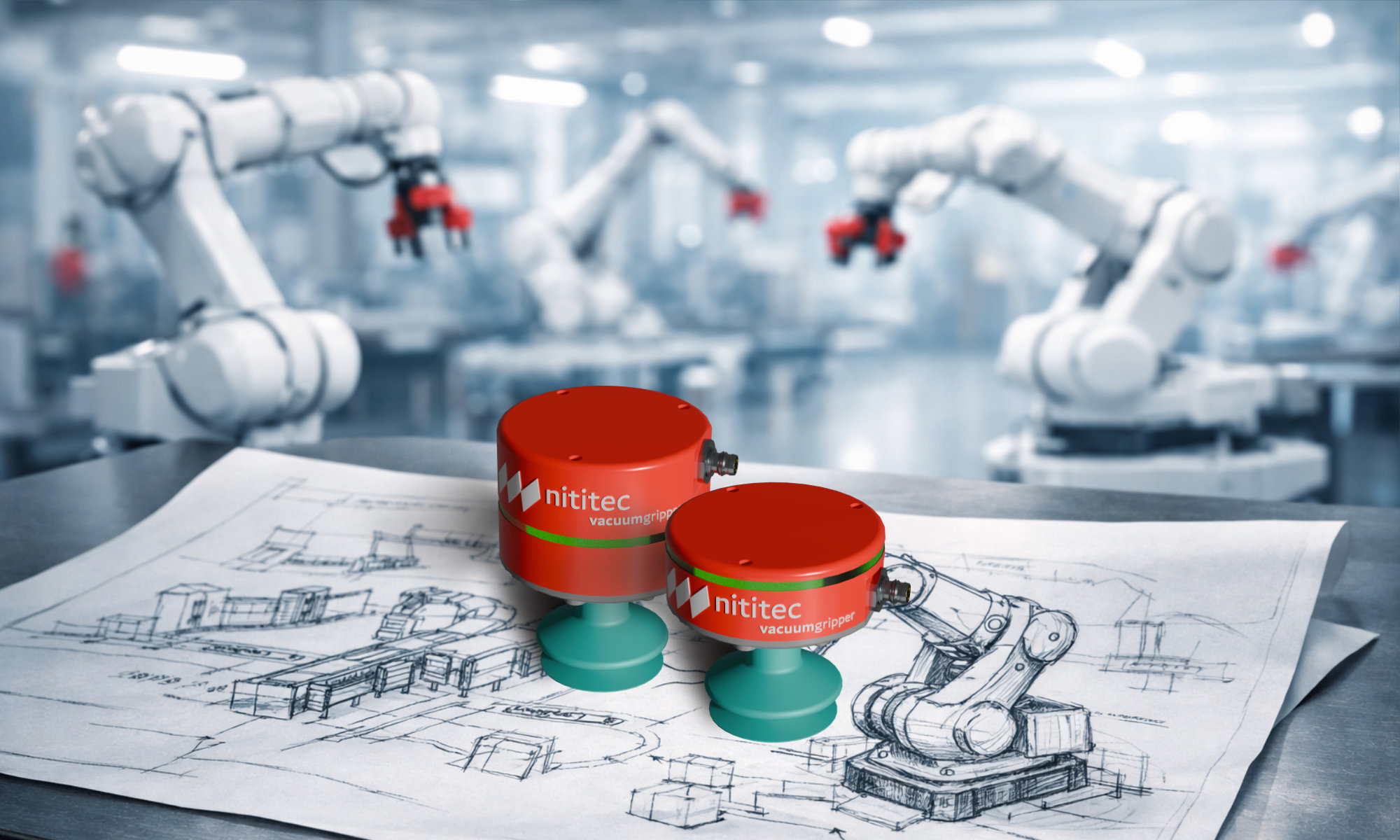


New Gripping Task. Compressed Air Again?
Anyone defining the gripping principle today isn’t just deciding whether a component will be moved safely. They’re also determining the infrastructure, energy consumption, and operating costs for the coming years.
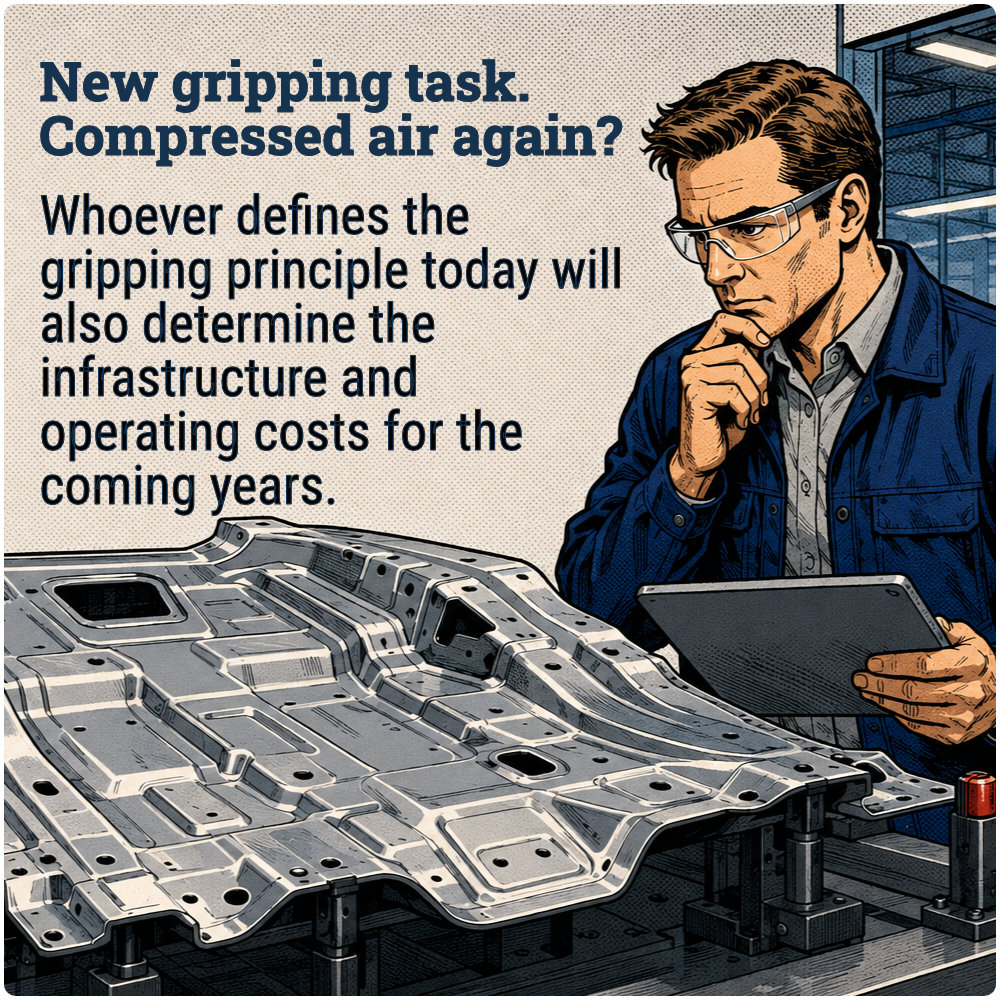
That’s why it’s worth asking one question before planning for compressed air, ejectors, and piping:
Does this application even need compressed air?
The familiar approach works. That’s exactly why it’s rarely questioned.
Vacuum gripping with compressed air has been established for decades. Designers are familiar with the components, system integrators know the design, and operators know that the principle works.
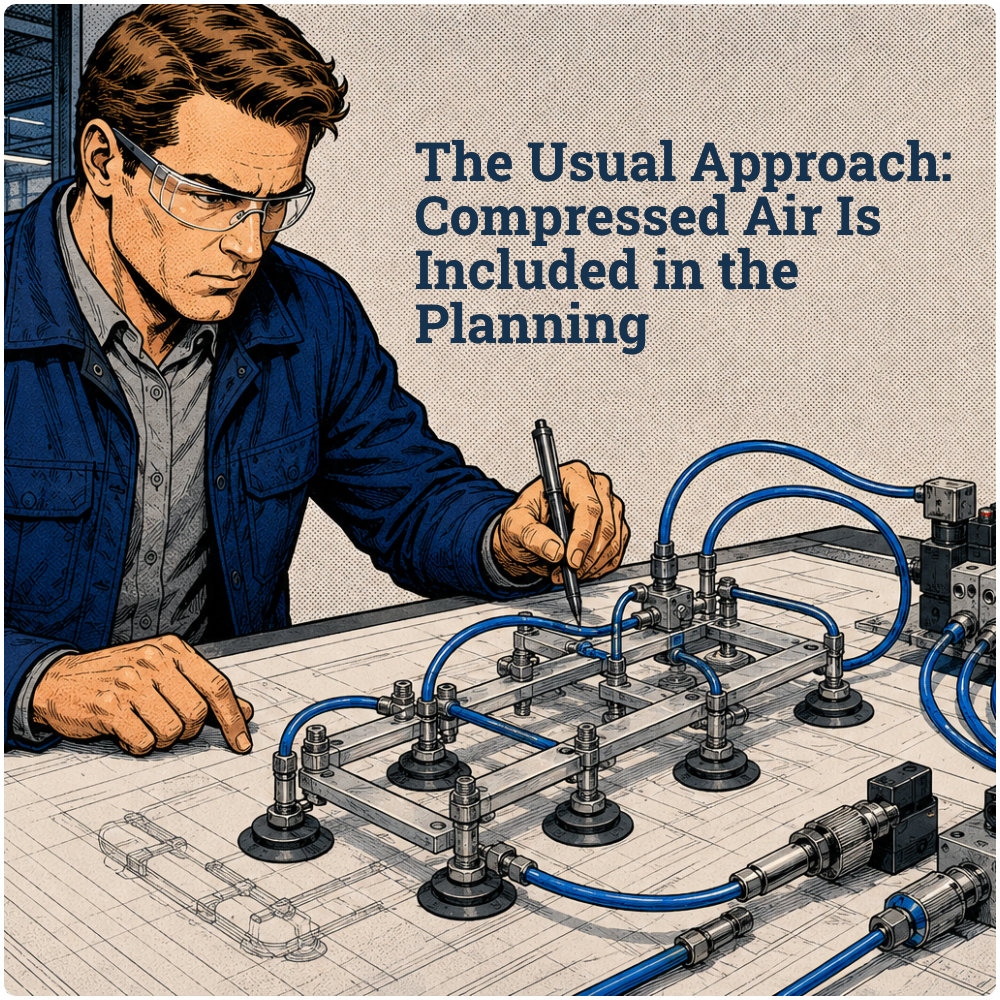
So, when a new gripping task arises, compressed air is often simply included in the plans again.
This solves the technical problem. However, compressor capacity, piping, valves, vacuum generation, and energy consumption over millions of gripping cycles remain part of the system.
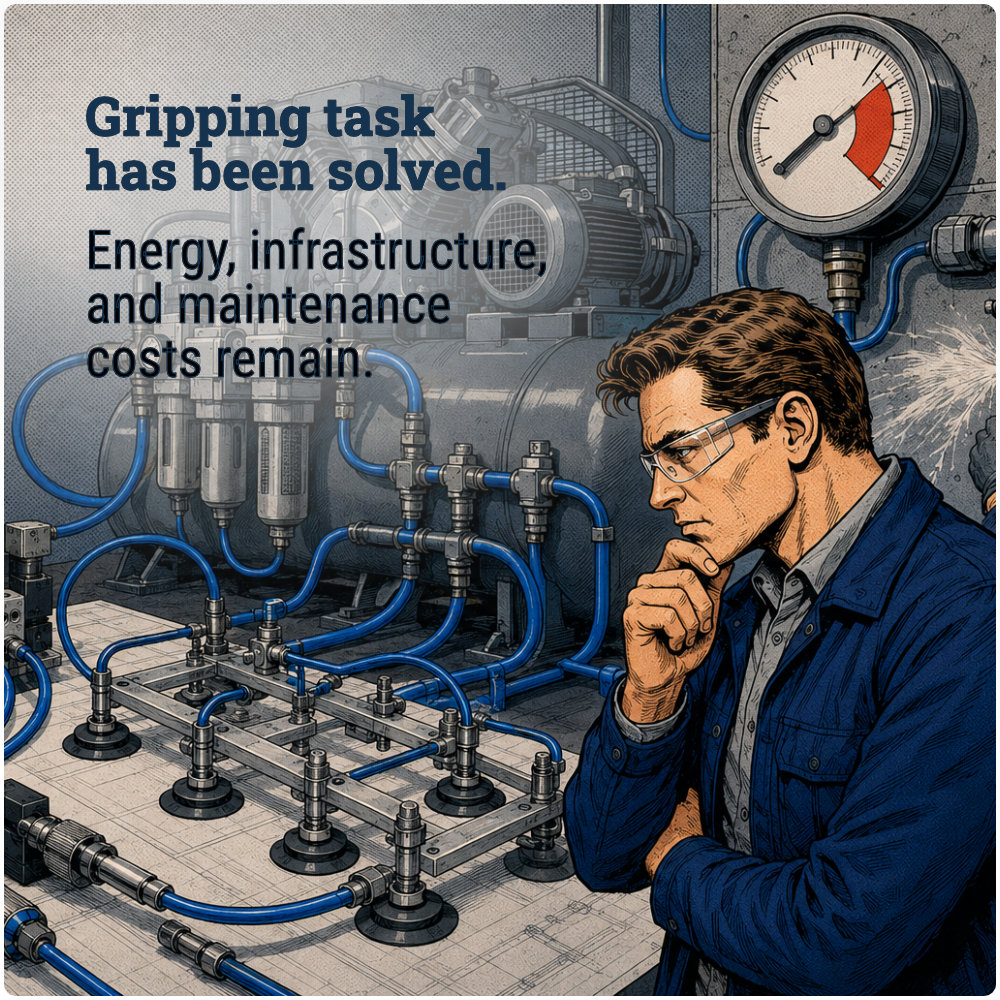
That doesn’t make pneumatics the wrong solution.
But a habit doesn’t make for a conscious decision.
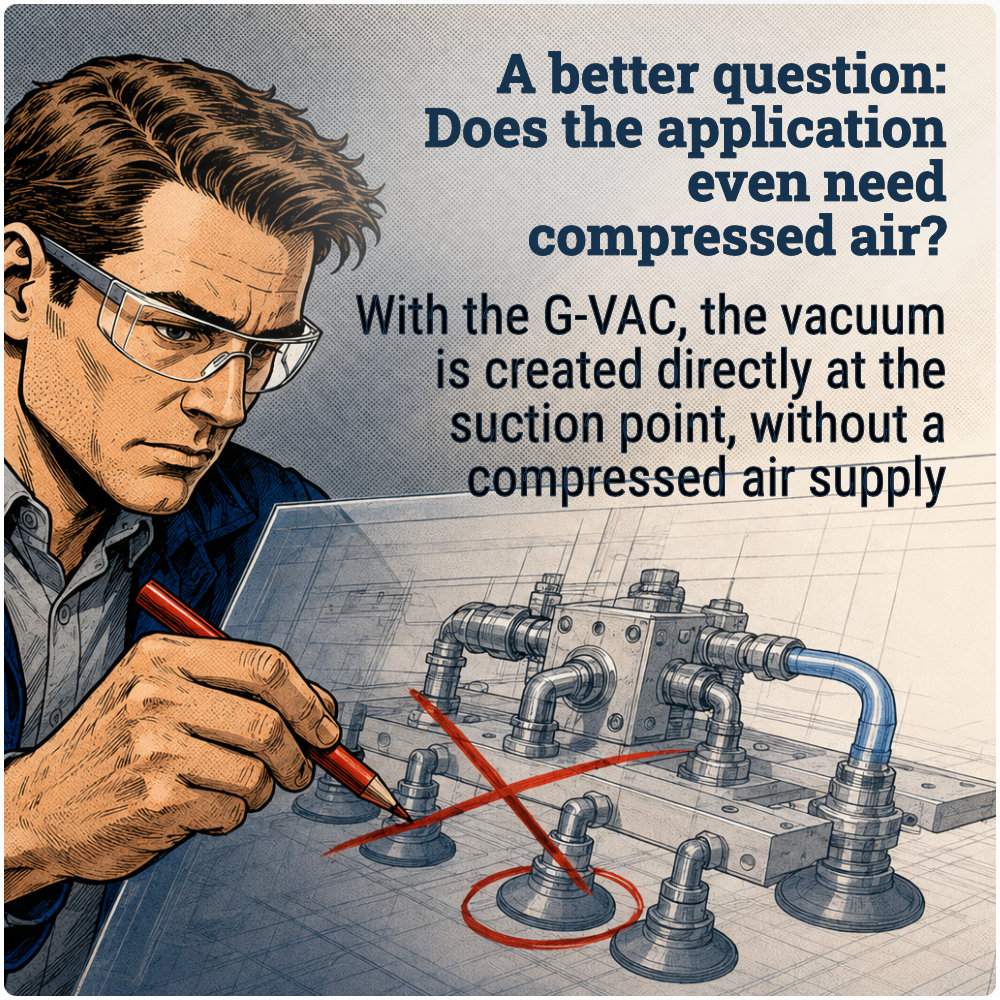
The better question: Does the application even need compressed air?
With the G-VAC, the vacuum is generated directly at the gripping point. Pneumatic vacuum generation is not required for this.
Therefore, the decisive factor is not the gripper itself, but the task at hand:
- What is the surface of the component like?
- Can air flow in?
- What cycle time is required?
- What safety requirements exist?
Only then can the appropriate gripping principle be determined.
Two Principles for Different Components
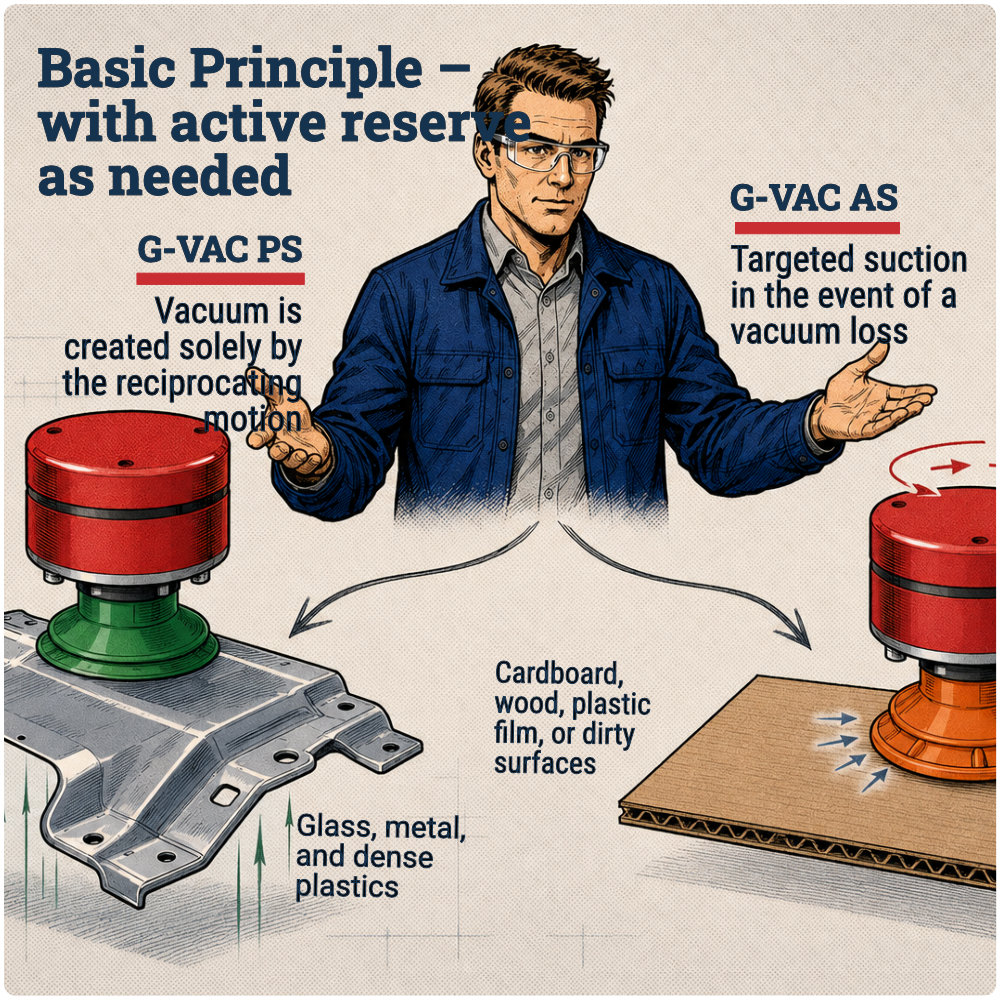
G-VAC PS
For largely impermeable surfaces such as glass, metal, or dense plastics.
The gripper rests on the workpiece and closes the system. A vacuum is created when the component is lifted—without a vacuum pump or compressed air.
G-VAC AS
For applications where air can flow through the workpiece—for example, with cardboard, wood, films, or other surfaces with leaks.
A local electric pump can compensate for vacuum losses and stabilize the vacuum.
From a Single Gripper to a Gripping System
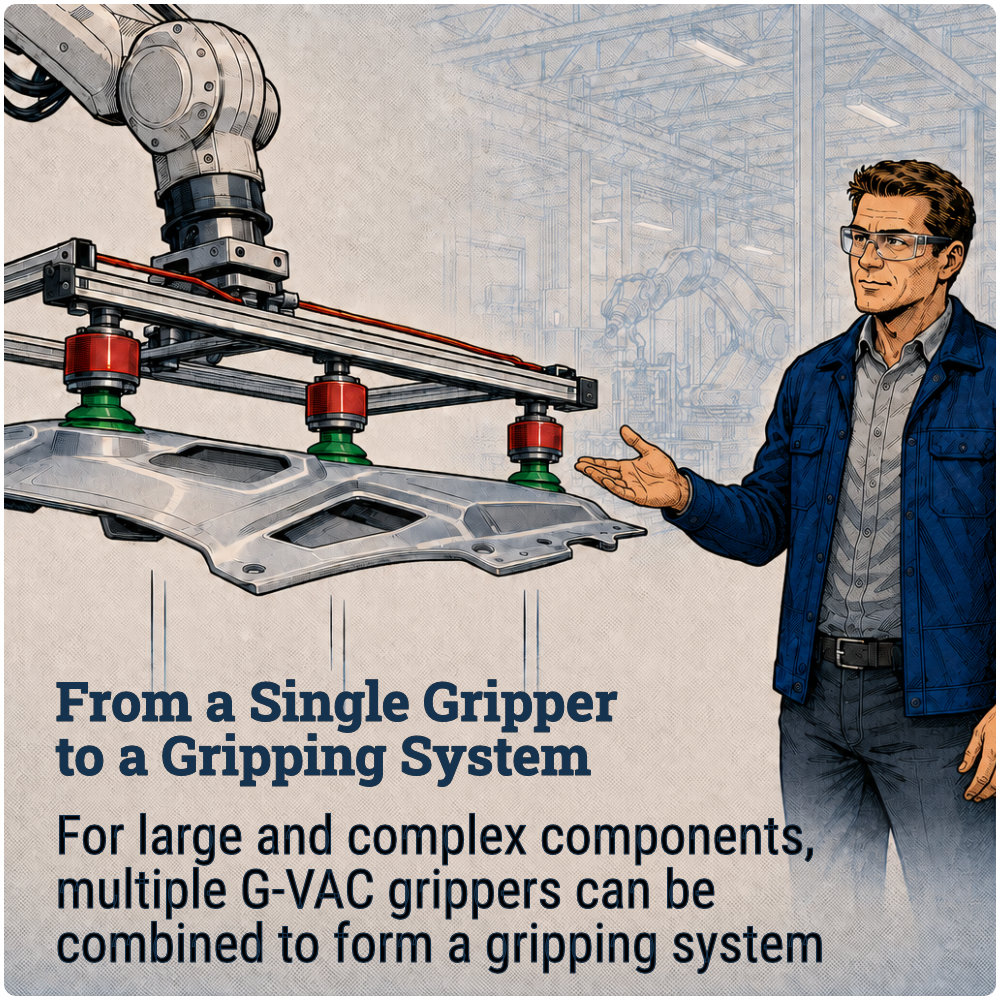
A large component does not necessarily require a large central vacuum generator.
Multiple G-VAC grippers can be combined into a gripping system and generate the vacuum where it is needed: directly at the individual suction points.
This allows the principle to be applied to large-surface or complex components as well.
The gripping task is planned once. Energy consumption continues for years.
For a single gripping cycle, the energy required for compressed air is barely noticeable.
However, one cycle becomes millions. One gripping point becomes several. One system becomes entire production lines.
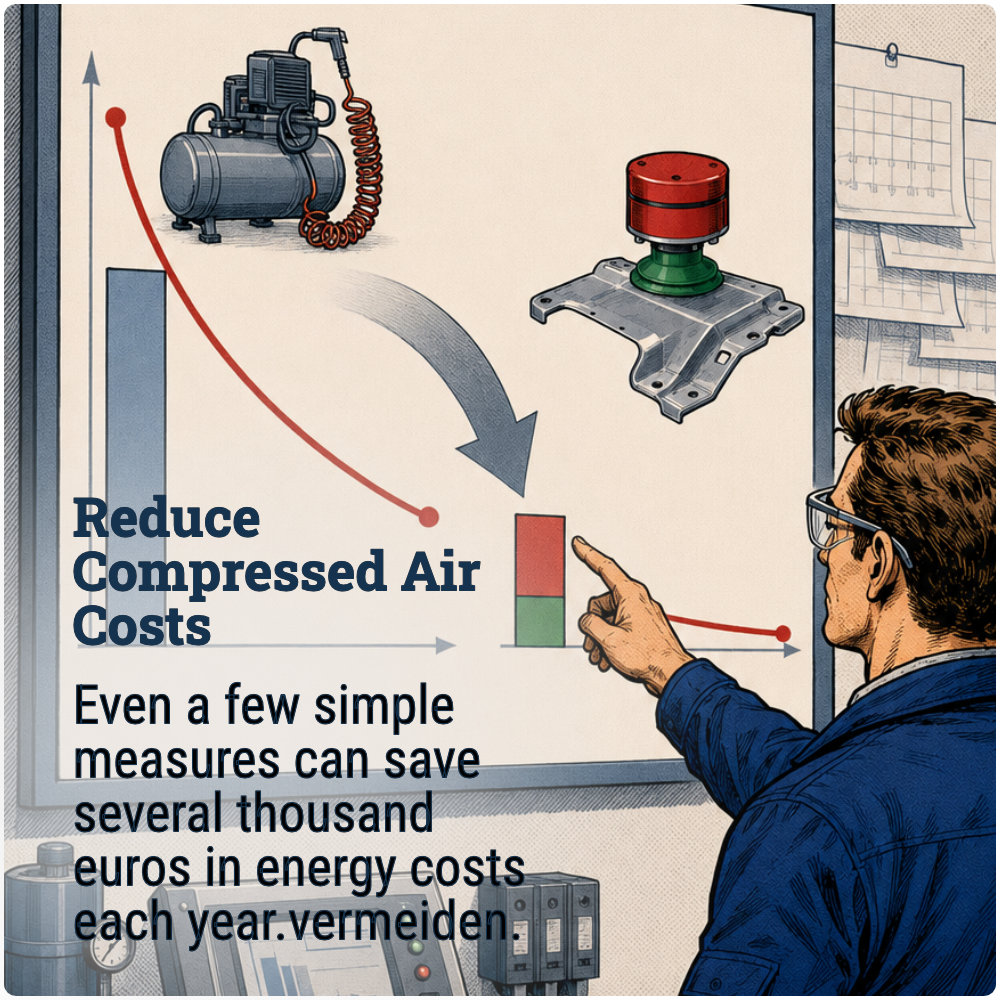
That’s why, in addition to the technical considerations, the economic question is also worth asking:
What will the chosen vacuum generation cost over the system’s operating life?
Show us your component.
You can’t determine whether a pneumatic-free vacuum gripping solution is suitable for a specific application just by looking at a product brochure.
In the Application Check, we evaluate the workpiece, surface, cycle time, and safety requirements under defined conditions on the robot.
We test which gripping solution works—and also where its limitations lie.

More Background
Pneumatic-Free Vacuum Gripping: The Unassuming Alternative
How research into nickel-titanium actuators, a Volkswagen project, and an initially unremarkable idea gave rise to a pneumatic-free vacuum gripping principle.
Why Use Compressed Air at All?
Yannik Goergen discusses the development of the gripper, the prejudices against electric vacuum systems, and the question of why fast release is at least as important for industrial cycle times as fast gripping.