
Non-Pneumatic Vacuum Gripping for Automation and Handling Systems
A Technology Option for Production Facilities, Manufacturing Engineering, and Automation Teams in the Automotive Industry
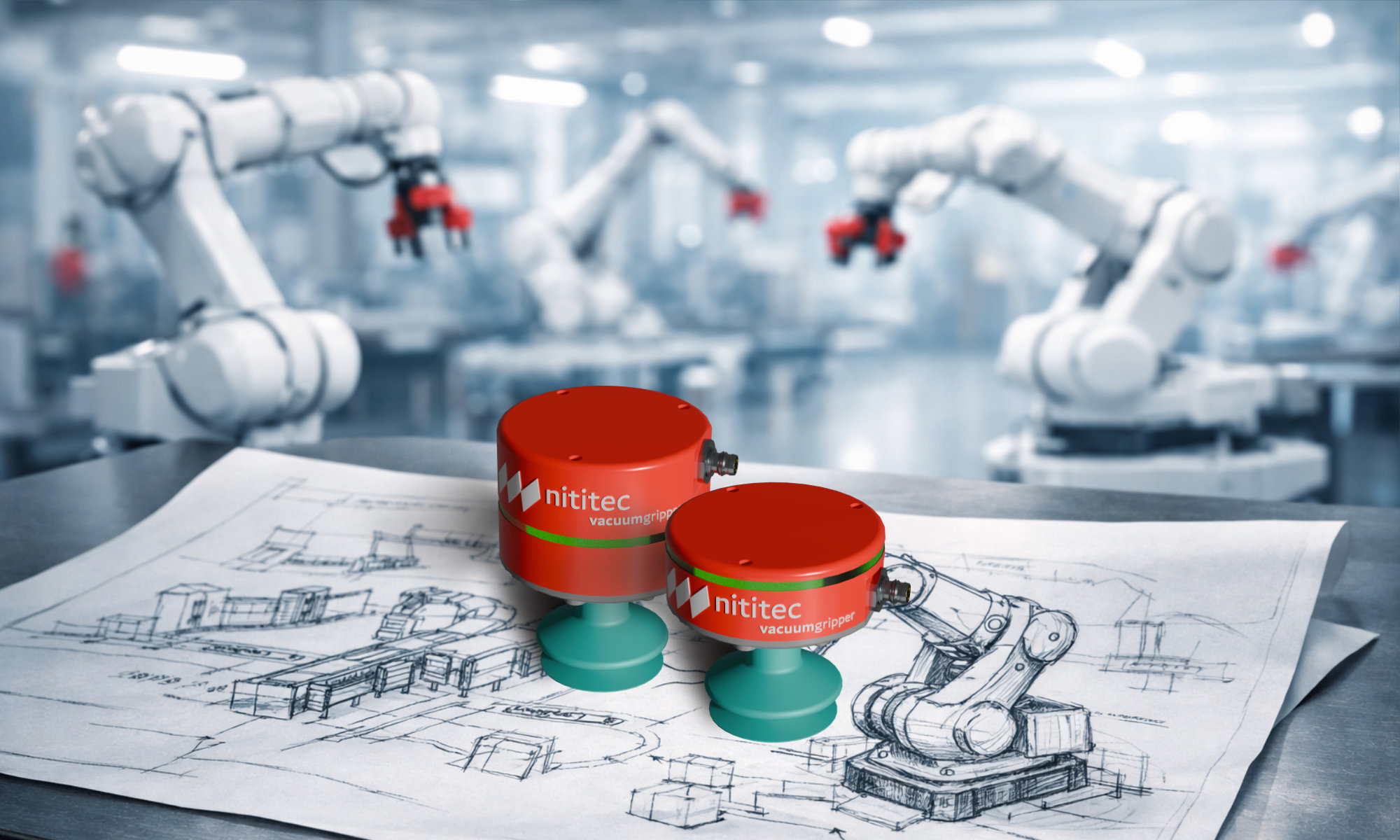
Many automotive production facilities have been using proven pneumatic gripping and vacuum technology for years. The G-VAC PS is not intended to replace these solutions across the board.
The approach is more targeted: The G-VAC PS complements existing solutions in situations where compressed air in gripping and handling processes results in energy consumption, infrastructure requirements, noise, maintenance, or complexity.
The gripper operates on 24 V, without compressed air, without a central vacuum infrastructure, and without a local vacuum pump.
This provides automotive manufacturing companies with an additional technology option for applications where pneumatic-free, compact, and energy-efficient automation concepts are to be evaluated.
What does this mean?
In many automotive facilities, the robot is electric.
However, the gripper environment is often still pneumatic.
This means additional infrastructure, hoses, valves, compressed air generation, energy losses, noise, and maintenance.
The G-VAC PS eliminates this component in suitable vacuum gripping applications.
For customers, this can mean:
- lower energy consumption
- less compressed air infrastructure
- reduced noise
- simpler mounting on the robot arm
- fewer sources of maintenance and leaks
- a concrete contribution to eliminating expensive compressed air in production
- A technology option for internal approval processes and future plant designs
Technology: What Sets the G-VAC PS Apart
The G-VAC PS is not a traditional vacuum gripper.
Nor is it an electric vacuum pump.
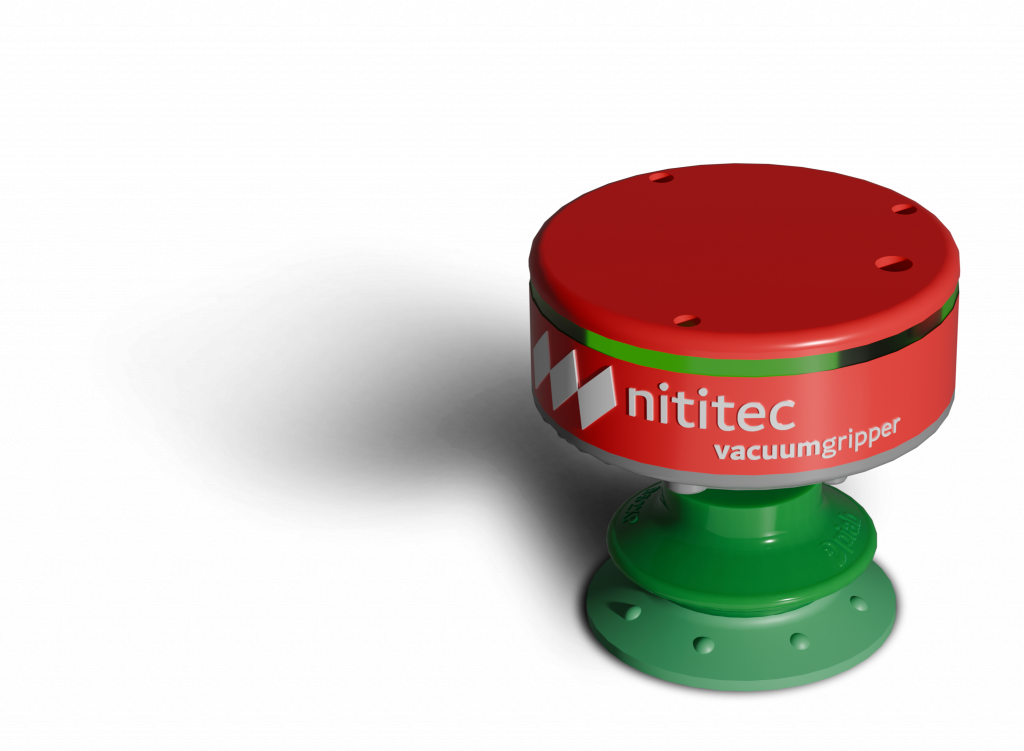
The G-VAC PS is a pneumatic-free, passive vacuum gripper for smooth and non-porous surfaces.
The vacuum is generated and maintained mechanically directly at the suction point. Electrical energy is required only for switching.
The real technological breakthrough lies in the SMA drive:The movement within the gripper is generated by shape-memory actuators made of nickel-titanium (NiTi). These so-called shape-memory alloys change their length when electrically activated, thereby enabling new design principles for gripping systems. This drive offers an exceptionally high energy density, allowing for an extremely small, lightweight design. Whereas a conventional electric drive would quickly weigh over 1 kg and be about ten times larger, our system remains in the range of approximately 100 g.
This makes G-VAC PS particularly attractive for applications where conventional pneumatic vacuum technology works in principle but results in unnecessary infrastructure, operating costs, or complexity.
Technical Specifications G-VAC PS
| Feature | Value |
|---|---|
| Electrical Connection | M8 connector, 4-pin |
| Protection Rating | IP54 |
| Voltage | 24 V DC |
| Rated Current / Switching Current | 30 mA / 250 mA |
| Payload | 5 kg |
| Operating Temperature | 0 to 40 °C |
| Weight | 100 g without suction gripper |
| Dimensions | Ø 70 mm x 38.5 mm |
System Properties
- Passive suction: no active vacuum generation
- Two power-independent operating states
- Fail-safe principle: no release in the event of a power failure
- Integrated acceleration and vacuum sensors
- Status and diagnostic signals to the PLC
- Visual operation and fault indicators
- Virtually silent operation
- Compatible with standard vacuum grippers
- Available with a robot flange, e.g., for Universal Robots
- Compatible with all common fieldbus systems
Suitable Applications
The G-VAC PS is suitable for smooth, non-porous surfaces, for example:
- Pick & Place
- Loading and unloading of machinery
- Component handling
- Clamping and fixing tasks
- Body parts and sheet metal parts
- Body-in-white applications
- Parts handling in assembly and automation processes
- Picking and feeding processes in manufacturing
- Suitable plastic or injection-molded parts with smooth surfaces
is not suitable G-VAC PS for highly porous, flexible, or air-permeable materials.
For these applications, we will be introducing the G-VAC AS this summer, featuring high-speed vacuum generation (and evacuation) directly at the suction point.
Where the G-VAC PS fits into automotive manufacturing
Automotive manufacturers do not need to completely overhaul their existing gripping technology. The benefit lies in suitable applications where compressed air needs to be specifically reduced or eliminated.
The G-VAC PS is an additional technology option for:
- pneumatic-free automation
- lower operating costs
- compact robot cells
- energy-efficient gripping
- clean or quiet handling
- alternatives to compressed air
- in-house technology testing
- technology validation for future plant concepts
- Pilot applications in manufacturing, assembly, or body shop operations
This means the G-VAC PS can be used in areas where compressed air is still taken for granted today but is increasingly being questioned from an energy, maintenance, or sustainability perspective.
Industrial Reference
The G-VAC PS is already being evaluated and used in industrial applications, including in the automotive sector.
A successful laboratory test was conducted with a German commercial vehicle manufacturer in the body-in-white sector. The approach is currently undergoing the technology approval process there for the handling of body parts.
Further evaluations involve applications such as injection molding unloading, glass handling, and industrial parts handling.
Technical Documentation
For further review, you can find our PDF downloads for the G-VAC PS here, as well as an operating cost calculator to compare pneumatic vs. electric systems.
The PDFs provide a concise overview of the operating principle, technical specifications, areas of application, and integration. Using the operating cost calculator, you can estimate the potential savings resulting from replacing pneumatic vacuum grippers.
Next Step
We’d like to work with you to determine whether the G-VAC PS is suitable for selected automotive applications, internal technology trials, or future system concepts.
A brief technical discussion is sufficient for an initial assessment. During this discussion, we will clarify:
- which applications are suitable
- what integration requirements exist
- which robot use cases are appropriate
- whether a lab test, pilot project, or internal technology evaluation makes sense
Contact:

Roger Kautz
nititec vacuum gripper GmbH
roger.kautz-ext@nititec-gripper.de
Phone: +49 176 62 944 177